
The Things Experience Teaches Us to Notice
Experienced people often recognise a problem before they can fully explain it. Their judgement has been shaped by years of noticing, trying, being corrected and working beside others.
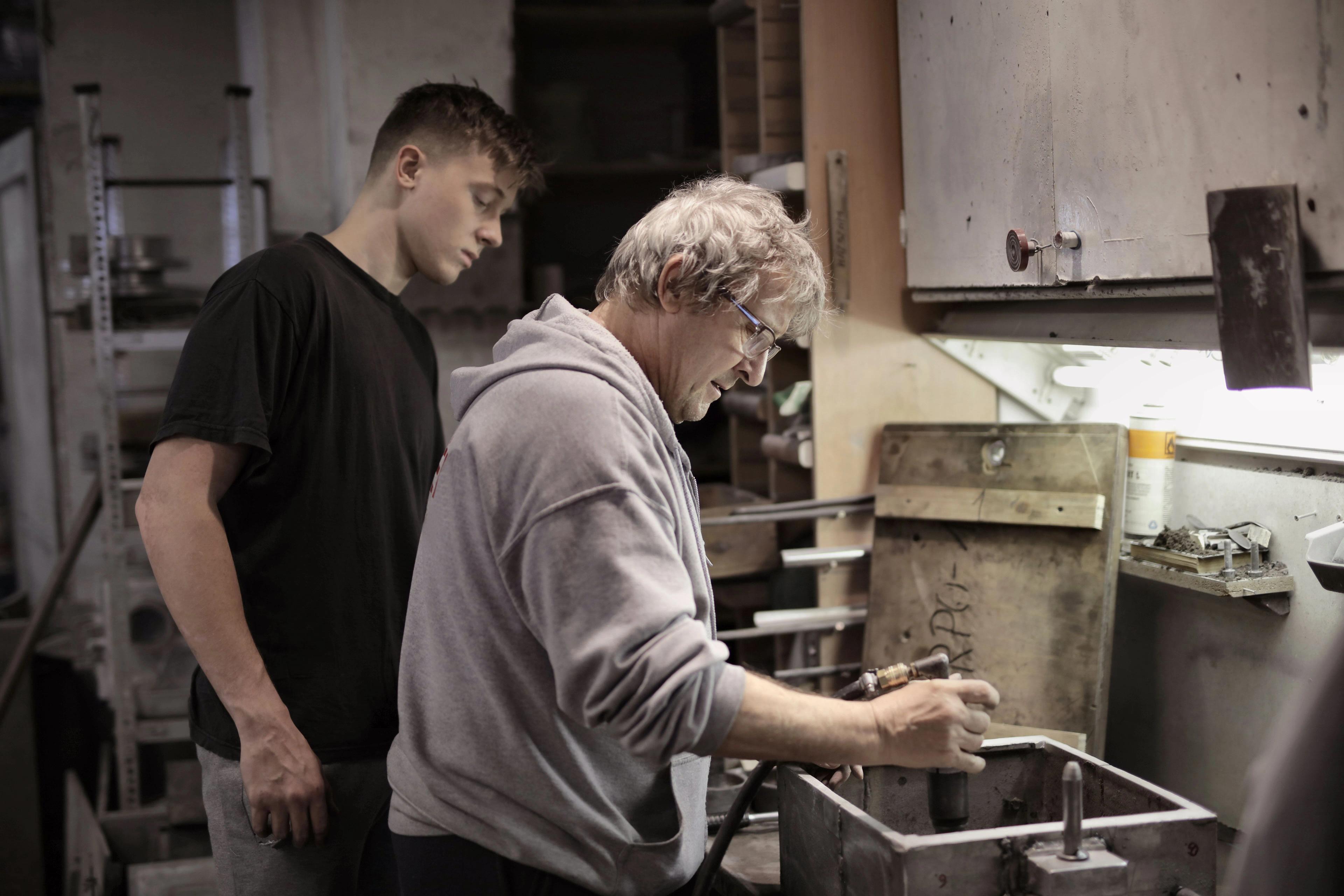
Ask an experienced mechanic how he knew which part to check first and he may answer, “I just knew.”
The answer sounds simple. The knowledge behind it is not.
Perhaps the sound reminded him of another engine he worked on years ago. Perhaps that earlier repair taught him which possibilities to rule out before dismantling anything. What appears to be an immediate instinct may be the result of many encounters with similar problems, including attempts that failed and corrections that changed how he approached the next one.
A teacher may recognise that a student's silence means confusion rather than concentration. A community organiser may understand that a meeting will not move forward until two particular people have spoken privately. In both cases, the person is responding to signals that are not necessarily obvious to someone encountering the situation for the first time.
These are illustrative examples. They point to a kind of knowledge that is difficult to reduce to a list of instructions: the ability to notice what matters in a particular situation.
Experience changes what becomes visible
A beginner and an experienced person can look at the same situation and notice different things.
The beginner may see a machine that is not working. The experienced mechanic may hear a particular sound, notice when it occurs and connect it to a fault encountered before.
The beginner may see a student who is quiet. An experienced teacher may recognise a pattern in the student's participation and know that the silence is unusual.
The difference is not necessarily that the experienced person has more information in front of them. They may be paying attention to different details.
Experience builds a history of comparisons. A person encounters situations, tries responses, sees what follows and adjusts their expectations. Over time, some signals become easier to recognise. Some explanations become less convincing. Some questions become more useful than others.
This does not mean experience makes someone infallible. Familiarity can also create assumptions. A problem that resembles an old one may have a different cause. Good judgement includes knowing when to pause, check and ask for help rather than forcing a new situation into an old explanation.
But experience can change the quality of attention. It teaches people what to look for and, just as importantly, what not to overlook.
The knowledge that is difficult to explain
People can often describe parts of what they do.
A mechanic can explain the sequence of checks. A teacher can describe signs of confusion. An organiser can outline how a meeting is prepared. These explanations are valuable, and they can help someone else begin to learn.
Yet a description may leave out the fine distinctions that guide action.
Which sound is significant? How much hesitation suggests a student is lost? When is a disagreement likely to be productive, and when does the group need a different conversation? At what point should someone stop following the normal procedure?
The answers may depend on timing, context and accumulated comparison. A person might recognise the right response before finding the words to explain exactly why it is right.
This is sometimes described as tacit knowledge: understanding that informs what someone can do, even when they cannot fully express it as a set of explicit statements.
The term should not make the knowledge seem mysterious. It is often practical and observable. Someone demonstrates it. Another person watches, tries, receives correction and gradually learns to notice the same details.
Learning happens beside people
This is one reason many trades and forms of practical work are taught through demonstration and participation.
A manual can explain a procedure. It can identify tools, steps and precautions. But a learner may still need to see how an experienced person handles an unusual case, how they recognise that a step has gone wrong, or when they decide not to continue.
Working beside someone creates opportunities for questions and correction at the moment they matter.
The learner can attempt the task and discover what they misunderstood. The experienced person can point to a detail that would be difficult to describe without the situation in front of them. Over repeated attempts, the learner develops a more reliable sense of what to notice.
This kind of learning is not limited to trades. People develop skills in facilitation, community work, research and team leadership through explanation, observation and practice. Written records still matter: a checklist can prevent omissions, and notes can preserve useful examples. They work best when we understand their limits.
Making experience easier to pass on
If practical judgement is built through experience, how can it be made available to people who were not present?
There is no single complete answer. Some knowledge is best passed on through demonstration. Some can be explained through stories of previous attempts. Some can be recorded as warning signs, questions to ask or conditions under which a procedure should not be used.
A group can also create opportunities for experienced participants to explain their decisions while the work is happening, rather than waiting until someone leaves. Asking why a particular step was taken, what alternatives were considered and what would change the decision can make hidden reasoning easier to examine.
These explanations should not be treated as permanent rules. Experience belongs to a context. A technique that worked under one set of conditions may not work under another. Later participants need room to question what they inherit.
The aim is not to turn every instinct into a manual. It is to make more of the useful experience visible, discussable and available for learning.
There is a difference between knowing how to do something and knowing why a particular action makes sense in a particular situation. Both matter.
And in many kinds of collective work, the most valuable knowledge is not simply what people can repeat. It is what they have learned to notice.
What do you know in your own work that nobody has ever asked you to explain?