
What Leaves When an Experienced Person Leaves
People should be free to move on. The challenge is helping useful knowledge travel without making any one person responsible for staying forever.
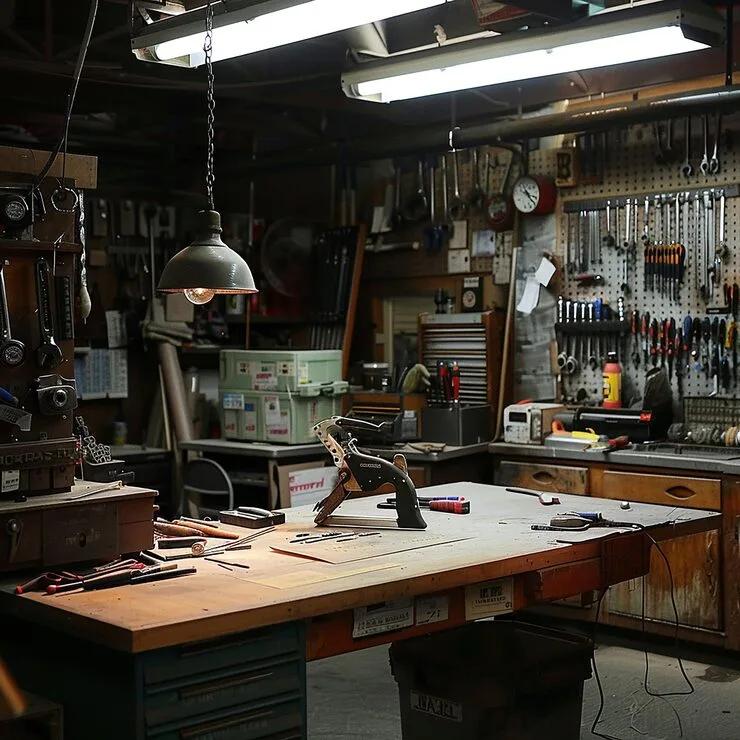
When a senior mechanic retires, the workshop keeps the tools, the invoices and the repair manuals.
The physical things are relatively easy to identify. They can be counted, stored, handed over and assigned to someone else.
What leaves is harder to list.
The mechanic knew which symptoms were commonly misdiagnosed, which unusual sound meant that work should stop before anything was taken apart, and which repair needed a second opinion. He had seen enough engines and enough failed attempts to recognise patterns that a newer mechanic might not yet notice.
He may have taught some of this to the people who worked beside him. Other parts of his judgement may only become visible the next time a similar fault arrives and he is no longer there to say, “I have seen this.”
This is an illustrative composite, not a story about a particular workshop. The transition it describes is familiar across many kinds of collective work: when an experienced person leaves, a group may retain its records while losing access to parts of the understanding built through years of participation.
Experience is not stored in one place
A person's contribution is rarely limited to the tasks listed in their job description.
An experienced mechanic may know how to diagnose a fault, but also which supplier can source a difficult part, which customer needs a careful explanation and which previous repair should be checked before a new one begins.
A community organiser may leave meeting notes and a contact list, but also carries an understanding of how relationships developed, which commitments were difficult to secure and how to approach a disagreement without damaging trust.
A student association may retain its plans and reports while losing the people who remember why a particular commitment was hard to keep, which arrangements were tried before and what the next team should be careful about.
Some of this knowledge can be written down. Some can be demonstrated. Some depends on relationships that cannot simply be transferred by handing over a phone number.
The point is not that one person contains everything a group needs. It is that the group may have come to depend on knowledge it has not recognised, shared or made accessible beyond that person.
The departure is not the problem
There is an important distinction here.
People should be free to retire, change jobs, move to another place or pursue something different. Their right to move on should not depend on staying behind as everyone else's memory.
A group that relies on one person's continued presence has a continuity problem. It should not turn that problem into a personal obligation for the person who is leaving.
Nor should the group assume that every experienced person's knowledge can or should be extracted. Some information may be personal, confidential or inseparable from a relationship. People deserve a say in what they share and how their contributions are represented.
The responsibility belongs to the group as well as to the individual. It can create conditions in which useful knowledge is shared during ordinary work, rather than waiting until a departure is announced.
Why last-minute handovers are limited
A handover meeting can help, but it cannot reliably recreate years of experience in an afternoon.
A departing person may be asked to list responsibilities, explain current projects and identify important contacts. That is useful. Yet the questions asked are often shaped by what the successor already knows to ask.
The less visible knowledge may not surface at all.
A successor may not know that a particular supplier has repeatedly missed deadlines, that a relationship needs careful handling or that a process has a failure mode not described in the manual. The departing person may not think to mention these details because they have become ordinary parts of how the work is done.
This is one reason knowledge transfer should happen before a transition becomes urgent. When experienced people explain their decisions as they work, demonstrate difficult tasks and discuss what earlier attempts taught them, others have opportunities to learn while the context is still present.
Working alongside someone also allows questions that a document cannot anticipate. A learner can ask why a particular sound matters, what would change the diagnosis or when the experienced person would stop and seek another opinion.
Make knowledge less dependent on a single person
Groups can begin by identifying where they depend heavily on individual experience.
Which tasks can only one person currently perform confidently? Which relationships are known only to one participant? Which decisions rely on history that is not recorded anywhere? Where do newcomers repeatedly have to ask the same questions?
These questions can guide practical steps.
- Pair experienced participants with others during important work, so knowledge is shared through demonstration and practice.
- Record the reasoning behind recurring decisions, including the conditions and limits under which an approach worked.
- Make important relationships less dependent on a single contact by introducing successors where appropriate.
- Invite experienced people to explain common warning signs, exceptions and mistakes while the work is happening.
- Review what has been shared with the people who contributed it, and respect boundaries around sensitive information.
None of these measures eliminates the value of experience. They make more of it available for others to learn from.
Continuity without permanent dependence
A group will never preserve every detail of what its members know. People continue learning, circumstances change and some understanding only becomes useful in a particular moment.
The aim is not to make departure painless or to keep a perfect record of every person's experience. It is to reduce the amount of valuable understanding that disappears simply because nobody thought to make it shareable.
A workshop should be able to welcome a new mechanic without expecting the retired one to remain permanently available. An association should be able to change executives without forcing the incoming team to rediscover every lesson. A community programme should be able to build on relationships without treating one organiser as their sole custodian.
The experienced person has earned the right to move on. The group has a responsibility to learn while that person is still there, and to carry forward what can appropriately be shared.
Continuity should not depend on asking people to stay. It should depend on helping what they know travel while they are here.